How to Vet a Peptide Supplier in Bali: Red Flags & What Real Testing Looks Like
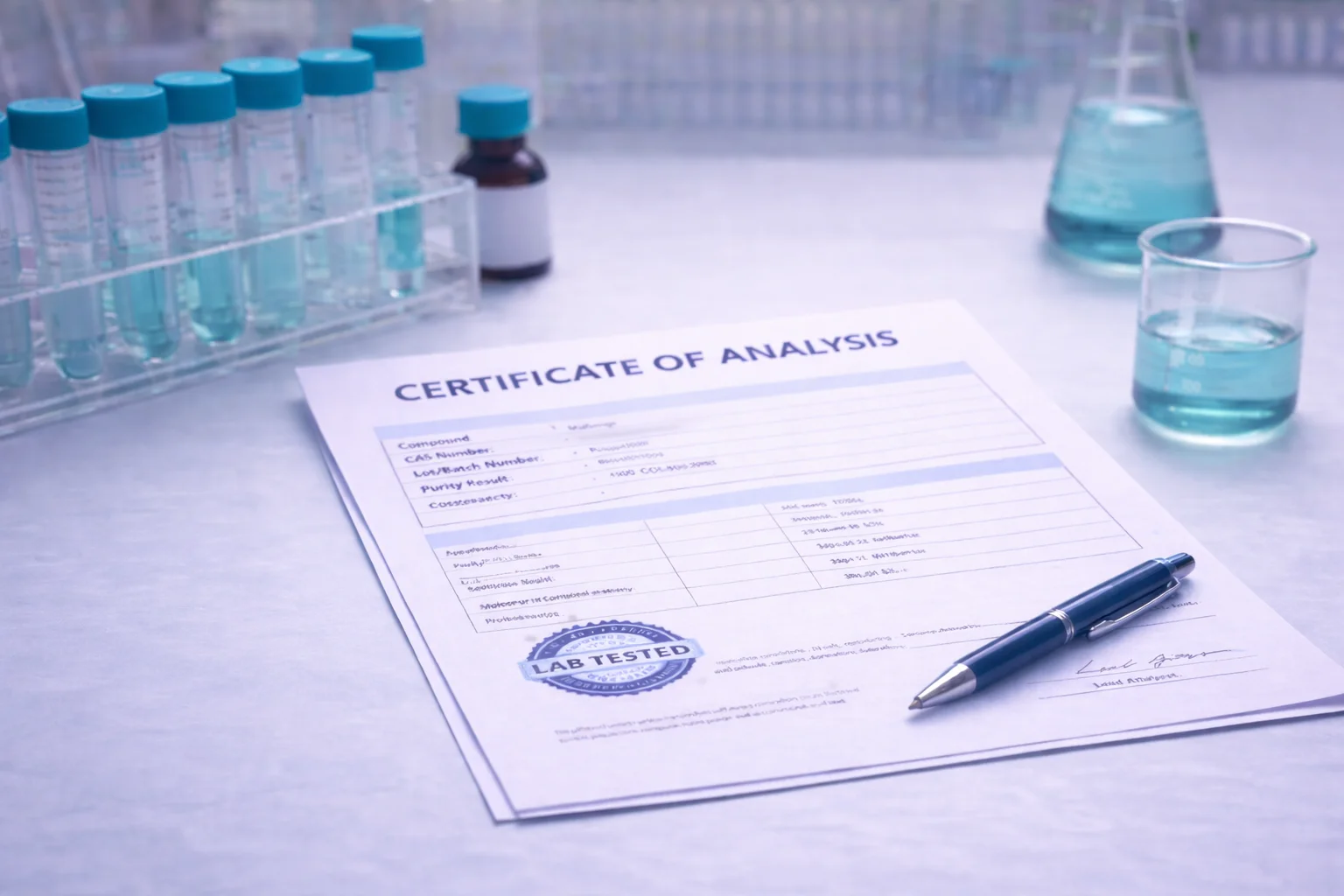
What a real, verifiable Certificate of Analysis looks like, common red flags, and questions worth asking before you buy.
Peptides work because your body already knows them. We explain the biology — without the jargon — so you understand exactly what you're putting in and why it matters.

What a real, verifiable Certificate of Analysis looks like, common red flags, and questions worth asking before you buy.
Why humidity matters more than heat for peptide stability in Bali, and a practical storage protocol for wet and dry season.
A research-focused overview of 5-Amino-1MQ, the selective NNMT inhibitor studied for adipocyte size reduction, elevated resting metabolic rate, NAD+/SIRT1 pathway activation, and insulin sensitivity in preclinical metabolic models.
A research-focused overview of Thymalin, the bioregulatory thymic peptide studied for T-lymphocyte maturation, immunosenescence reversal, cytokine balance, and immune longevity in aged and immunocompromised models.
Research peptides occupy a grey zone in Indonesian law — they are not controlled narcotics, but they are also not approved medicines. This guide explains the legal framework, what customs means in practice, and what you need to know as a researcher in Bali.
Bali's tropical climate — 30–35°C average temperature, 80%+ humidity, and regular power outages — creates real risks for peptide storage. This guide covers what you need to do to keep peptides stable in a tropical environment.
Nasal sprays and subcutaneous injections are the two primary delivery methods for research peptides. This guide compares bioavailability, speed of onset, which peptides suit each method, and the practical differences for regular use.
Surfing in Bali puts specific stress on shoulders, knees, ankles, and spine. BPC-157, TB-500, and KPV are the most researched peptides for surf-related injuries — this guide covers what the science shows and what Bali surfers are using.
Retatrutide, Tirzepatide, and Semaglutide are the most-researched weight loss peptides available in Bali. This guide covers how each works, what the clinical data shows, and what to know before sourcing them in Bali in 2026.
A complete step-by-step guide to using a pre-filled peptide pen — from first-use setup and dose dialling through injection technique, site rotation, and storage between uses.
A practical guide to designing cognitive performance research protocols using Semax, Selank, Dihexa, and Pinealon — covering BDNF biology, anxiolytic-cognitive stacking rationale, nasal delivery mechanisms, and what the published evidence shows about protocol structure.
A practical guide to designing fat loss research protocols using GLP-1 receptor agonists, growth hormone secretagogues, and metabolic peptides — covering compound selection, dose titration rationale, and what the clinical evidence says about protocol structure.
A practical guide to designing longevity research protocols using NAD+ precursors, Epitalon, MOTS-c, SS-31, and related compounds — covering mitochondrial biology, telomere science, protocol structure, and the current state of human evidence.
A practical guide to designing performance and growth hormone optimisation research protocols using CJC-1295, Ipamorelin, and Tesamorelin — covering GH axis biology, pulsatile secretion, stacking rationale, and what the clinical evidence shows about protocol structure.
A practical guide to designing tissue repair and recovery research protocols using BPC-157, TB-500, and related peptides — covering mechanism rationale, injection vs oral routes, protocol duration, and what preclinical evidence says about stack design.
A practical guide to designing skin and aesthetics research protocols using GHK-Cu, Melanotan II, KPV, and related dermal peptides — covering collagen biology, melanogenesis, inflammation pathways, topical versus injectable routes, and how to structure a skin repair research protocol.
A research-focused overview of peptides studied for cognitive performance, neuroprotection, anxiety reduction, and neuroplasticity — covering Semax, Selank, Dihexa, and Pinealon.
A research-focused overview of peptides studied for fat loss — covering GLP-1 receptor agonists, growth hormone secretagogues, and metabolic peptides — with mechanisms, evidence summaries, and compound comparisons.
A research-focused overview of peptides studied for longevity and healthy ageing — covering telomere biology, mitochondrial function, epigenetic regulation, and anti-senescence compounds.
A research-focused overview of peptides studied for muscle growth, strength, and recovery — covering growth hormone secretagogues, tissue repair peptides, and anabolic mechanisms.
A research-focused overview of peptides studied for skin health, wound healing, pigmentation, and aesthetic outcomes — covering GHK-Cu, Melanotan II, KPV, and their mechanisms.
A research overview of CJC-1295 dosage protocols, mechanism of action as a GHRH analogue, study findings on growth hormone secretion, and how it is studied in combination with Ipamorelin in pulsatile GH research.
A comprehensive guide to peptide research in Bali: what peptides are, how they are studied, researched compounds, product formats, and how to confirm local availability and delivery.
A research guide to semaglutide (sold as Ozempic and Wegovy) in Bali: how it works, clinical trial data, availability in Indonesia, and how newer triple-receptor agents compare in current metabolic research.
A research-focused explanation of how retatrutide works through GLP-1, GIP, and glucagon receptor activity in metabolic peptide studies.
A comprehensive guide to tirzepatide for research purposes in Bali — how it works, dosage protocols used in clinical trials, how it compares to retatrutide, and how to get started with expert guidance.
A practical research guide for biohackers and wellness travellers visiting Bali — covering peptide research for longevity, body composition, cognitive performance, sleep, and recovery, plus how to confirm local availability and delivery.
A research-focused overview of BPC-157's gastrointestinal effects — from its origin in gastric juice to preclinical findings on intestinal healing, leaky gut, IBD models, and gut-brain axis research.
A research-focused overview of Epitalon (Epithalon), the tetrapeptide studied for telomerase activation, telomere elongation, pineal gland regulation, and longevity biology across four decades of published research.

A research-focused overview of GHK-Cu (copper peptide), its gene activation properties, role in collagen synthesis, wound healing, and anti-aging biology in preclinical and early human studies.
A research-focused overview of Ipamorelin and CJC-1295, two complementary peptides studied for their ability to stimulate pulsatile growth hormone release, support recovery, body composition, and healthy aging.
A research-focused comparison of Selank and Semax — two anxiolytic and cognitive-enhancing peptides developed in Russia, examining their mechanisms, BDNF effects, anxiety research, and key differences.
Compare Retatrutide, Tirzepatide, and Semaglutide across receptor targets, published trial results, evidence maturity, and key research limitations.
A clear, complete introduction to peptides — what they are, how they work in the body, the difference between peptides and proteins, the main research categories, and how they are studied in modern longevity and performance science.

A deep dive into the science behind stacking BPC-157 and TB-500. Discover how these two peptides work through complementary pathways to amplify tissue repair, reduce inflammation, and accelerate recovery.

A practical guide to understanding a peptide Certificate of Analysis (CoA), what each section means, how purity percentage is measured, and why it matters for research integrity.
A step-by-step guide to reconstituting lyophilized research peptides using bacteriostatic water. Covers equipment, dosage calculations, storage, and common mistakes.
Learn how BioPepTech's free one-on-one consultation helps you design a personalised peptide protocol in Bali — what to expect, what questions to prepare, and how protocol design differs from simply buying peptides.
A deep dive into SS-31 (elamipretide), the mitochondria-targeted tetrapeptide showing remarkable results in cellular energy research, cardiac function studies, and age-related decline models. What the science says about its mechanism, dosage protocols, and research applications.
A research-focused overview of MOTS-C, mitochondrial signaling, metabolic flexibility, exercise adaptation, and current areas of scientific investigation.
A research-focused overview of NAD+, mitochondrial function, cellular energy production, healthy aging research, and current scientific investigations.
A research-focused overview of peptides being studied for body weight regulation, appetite signaling, metabolic health, and energy balance.
A research-focused overview of retatrutide dosage ranges, study protocols, mechanism of action, reported findings, and key limitations in current metabolic peptide research.
A research-focused review of side effects reported in retatrutide clinical studies, including gastrointestinal events, tolerability, dose escalation, and current safety considerations.
A research-focused comparison of retatrutide and tirzepatide, including receptor activity, mechanisms of action, metabolic research findings, and current areas of scientific investigation.
A cloudy peptide solution after reconstitution usually indicates aggregation, incorrect technique, or degradation. Here is how to identify the cause and what to do.
Reconstituted peptides must be refrigerated. Lyophilised (powder) peptides can tolerate short periods at room temperature but last significantly longer when kept cool. This guide explains what each format requires and why.
Persistent hunger while using Retatrutide is more common than most people expect. This article explains the most likely reasons — from dose, timing, and rebound appetite to individual variation — based on what the research shows.
Mixing peptides in the same syringe is sometimes done in research settings but carries real risks — pH incompatibility, aggregation, and loss of activity. Here is what to consider before combining compounds in one injection.

MOTS-c and NAD+ work through related but distinct mitochondrial pathways. Here is what the available research says about combining them, timing considerations, and what to watch for.
Using multiple peptides on the same day is common in research protocols, but not all combinations are equally studied. Here is what the evidence says about same-day use, timing, and what to consider before combining compounds.
A lump or raised area after a subcutaneous peptide injection is common and usually harmless. Here are the most likely causes — from injection speed to site reaction — and when to be concerned.
Most reconstituted peptides are stable for 28–60 days when refrigerated in bacteriostatic water. Some are more fragile. This guide covers shelf life by compound type, signs of degradation, and how to extend stability.
If Retatrutide appears to have stopped producing results, the most common reasons are dose ceiling, plateau adaptation, unrealistic timelines, or issues with the compound itself. Here is how to evaluate each one.
Travelling internationally with research peptides involves customs, cold-chain, and legal considerations. Here is a practical overview of what to know before bringing peptides to Bali.
BPC-157 and TB-500 are both recovery peptides but work through entirely different mechanisms. This comparison covers how each works, what the research shows, their practical differences, and whether combining them makes sense.
GHK-Cu is a copper-binding tripeptide that activates collagen synthesis pathways. Collagen supplements provide amino acid building blocks. They work at different levels and are not equivalent. Here is how they compare.
MOTS-c is a mitochondrial-derived signalling peptide. NAD+ is a coenzyme restored through oral precursors. Both affect mitochondrial function but through different mechanisms. Here is a clear side-by-side comparison.
Tirzepatide is a dual GLP-1/GIP agonist approved for type 2 diabetes and obesity. Retatrutide adds a third receptor — glucagon — making it a triple agonist with greater weight loss in Phase 2 trials. This article compares mechanism, evidence, and practical differences.
Semax is stimulating and BDNF-upregulating. Selank is calming and anxiolytic. Both are Russian-developed cognitive peptides with different profiles. This comparison explains when each is studied and why they are sometimes combined.
SS-31 (Elamipretide) and MOTS-c both target mitochondria but through completely different mechanisms. SS-31 is a cardiolipin-binding antioxidant. MOTS-c is a mitochondrial-derived signalling peptide. Here is how they differ.
Tesamorelin is an FDA-approved GHRH analogue for HIV-associated lipodystrophy. CJC-1295 with Ipamorelin is a popular GH secretagogue combination. Here is how their mechanisms, evidence, and practical profiles compare.
Learn how to evaluate research peptide suppliers, protect cold-chain storage in Bali's tropical climate, and confirm local delivery before ordering.
Canggu is Bali's most active hub for biohacking and performance optimisation. This guide covers the local research peptide landscape, supplier evaluation, tropical storage, and how to confirm delivery by item and address.
Seminyak attracts a more established, luxury-focused demographic than Canggu. This guide covers the research peptide landscape in Seminyak — the compounds most relevant to longevity and aesthetic goals, how to store them, and conditional same-day delivery options.
Ubud is Bali's wellness and spiritual retreat capital. This guide covers research peptide interest in Ubud — the compounds studied by its health-conscious community, tropical storage considerations, and conditional same-day delivery options.
Uluwatu is home to Bali's most dedicated surf and outdoor sports community. This guide covers research peptide interest in Uluwatu — recovery-focused compounds, storage in a clifftop environment, and conditional same-day delivery options to the Bukit Peninsula.
A guide to BioPepTech research peptide delivery across Bali, from Canggu to Uluwatu, Seminyak to Ubud. Availability and timing are confirmed for the selected item and destination.
A clear, jargon-free introduction to research peptides — what they are, how they differ from steroids and supplements, what the research currently shows, and what to understand before exploring them.
A comprehensive guide to storing peptides correctly — covering lyophilised vs reconstituted vials, temperature requirements, light exposure, freeze-thaw cycles, bacteriostatic water, and practical tips for Bali's tropical climate.
BioPepTech products are supplied strictly for research use only. All educational content is intended for informational purposes within the context of scientific inquiry and is not intended to diagnose, treat, cure, or prevent any condition.