
Summary
A research-focused overview of BPC-157's gastrointestinal effects — from its origin in gastric juice to preclinical findings on intestinal healing, leaky gut, IBD models, and gut-brain axis research.
Where BPC-157 Comes From
BPC-157 is not an entirely foreign molecule.
It is a synthetic pentadecapeptide — 15 amino acids — derived from a partial sequence of Body Protection Compound, a protein found naturally in human gastric juice. This origin is not coincidental. The gastric mucosa is one of the most regeneratively active tissues in the human body, constantly repairing itself against the corrosive environment of stomach acid, digestive enzymes, and pathogenic challenge.
The hypothesis that drove BPC-157's development was straightforward: if the stomach produces a compound that protects and rapidly repairs its own lining, that compound — or a stable synthetic derivative — might have broader tissue-protective properties.
Decades of preclinical research have examined this hypothesis extensively. The gastrointestinal system remains BPC-157's most studied biological domain.
The Gastrointestinal Mucosa: What BPC-157 Is Protecting
Before examining the research, it helps to understand the tissue being studied.
The gastrointestinal mucosa — the lining of the stomach and intestines — performs several simultaneous functions:
- Selective absorption of nutrients, water, and electrolytes
- Barrier function: preventing bacteria, toxins, and incompletely digested proteins from entering systemic circulation
- Immune surveillance: the gut-associated lymphoid tissue (GALT) is the largest immune organ in the body
- Hormone secretion: the gut produces more than 20 hormones, including GLP-1, GIP, and serotonin (95% of the body's serotonin is in the gut)
- Microbiome habitat: the intestinal surface is home to trillions of microorganisms central to immune and metabolic function
When the mucosal barrier is compromised — through inflammation, infection, NSAID use, stress, alcohol, or autoimmune processes — the consequences extend well beyond the gut itself. Increased intestinal permeability ("leaky gut") allows bacterial endotoxins and undigested proteins to enter circulation, driving systemic inflammation linked to metabolic disease, autoimmune conditions, and neurological dysfunction.
BPC-157 research focuses heavily on protecting and restoring this barrier.
BPC-157 and Gastric Ulcer Research
The most extensively studied gastrointestinal application of BPC-157 is gastric ulcer healing.
Rodent models of gastric ulceration — induced by NSAIDs, alcohol, acetic acid, cysteamine, or stress — have been used to examine BPC-157's protective and healing properties across dozens of published studies, primarily from the research group of Predrag Sikiric at the University of Zagreb.
Consistent findings across these models include:
- Accelerated macroscopic healing of gastric ulcers in treated groups versus controls
- Enhanced proliferation of mucosal epithelial cells in ulcer margins
- Increased granulation tissue formation and angiogenesis at ulcer sites
- Upregulation of growth factors including EGF (Epidermal Growth Factor) at healing margins
Notably, BPC-157 has been observed to protect against ulcer formation even when administered concurrently with ulcerogenic agents — suggesting a cytoprotective mechanism operating in parallel to its healing activity.
In some studies, the healing rate with BPC-157 exceeded that seen with omeprazole (a standard proton pump inhibitor used as a comparator), though these comparisons are from animal models.
Intestinal Anastomosis and Bowel Healing Research
Beyond the stomach, BPC-157 has been studied in models of intestinal injury and surgical repair.
Intestinal anastomosis — the surgical reconnection of bowel segments after resection — is a high-risk procedure where healing failure (anastomotic leak) carries significant morbidity. Rodent models of anastomosis have been used to examine whether BPC-157 can improve healing outcomes.
Published findings include:
- Improved anastomotic bursting pressure (a measure of healing strength) in BPC-157-treated animals
- Increased collagen deposition and organisation at anastomosis sites
- Faster restoration of intestinal wall architecture
- Protection of anastomotic integrity even under conditions designed to impair healing (including concurrent corticosteroid administration and bowel ischemia)
These findings are consistent with BPC-157's broader connective tissue and angiogenic effects observed in musculoskeletal research — the gut, like tendons and ligaments, is a collagen-rich tissue dependent on vascularisation for repair.
Inflammatory Bowel Disease Models
Inflammatory bowel disease (IBD) encompasses Crohn's disease and ulcerative colitis — chronic inflammatory conditions of the gastrointestinal tract with significant unmet medical need.
BPC-157 has been studied in preclinical IBD models using chemical induction of colitis (TNBS, DSS) and other inflammatory triggers.
Key observations include:
- Reduced macroscopic and histological colitis severity in treated animals
- Lower levels of pro-inflammatory cytokines (TNF-alpha, IL-6, IL-1beta) in intestinal tissue
- Preserved mucosal architecture compared to untreated colitis controls
- Reduced oxidative stress markers in inflamed intestinal tissue
- Normalisation of gut motility disrupted by experimental colitis
Researchers have proposed several mechanisms for these effects, including BPC-157's influence on the NO (nitric oxide) system — which plays a central role in intestinal blood flow regulation and mucosal defence — and its modulation of the VEGF pathway, which drives angiogenesis essential for tissue repair.
Intestinal Permeability and "Leaky Gut" Research
Increased intestinal permeability — colloquially called "leaky gut" — describes a breakdown in the tight junction proteins that seal adjacent enterocytes and prevent uncontrolled paracellular transport across the intestinal barrier.
This breakdown is implicated in:
- Food sensitivity and intolerance
- Systemic inflammatory conditions
- Metabolic endotoxaemia (bacterial LPS entering circulation)
- Autoimmune triggers
- Neuroinflammation via the gut-brain axis
BPC-157 research has examined its effects on tight junction integrity directly.
Studies using models of induced permeability (ethanol, NSAIDs, stress) have observed:
- Preserved tight junction protein expression (occludin, claudin) in BPC-157-treated animals
- Reduced paracellular permeability measured by marker molecule passage
- Protection against NSAID-induced mucosal disruption at multiple levels of the GI tract, including the small intestine — a region often overlooked in gut research
The Gut-Brain Axis
One of the most compelling areas of BPC-157 research extends beyond the gut itself into the gut-brain axis — the bidirectional communication network connecting gastrointestinal function to central nervous system activity.
Several observations from BPC-157 research are relevant here:
Serotonin system: The gut produces approximately 95% of the body's serotonin — a neurotransmitter central to mood, cognition, and gastrointestinal motility. BPC-157 has been shown to influence serotonin metabolism in both gut and brain tissue in rodent studies, which has led to investigation of its potential effects on depression and anxiety-like behaviour.
Dopamine system: Studies examining BPC-157 in models of dopamine system disruption (using agents like haloperidol and amphetamine) have found BPC-157 capable of modulating dopaminergic activity — an unexpected finding for a peptide studied primarily in gastrointestinal contexts.
Vagus nerve: The vagus nerve is the primary anatomical channel of the gut-brain axis. Researchers studying BPC-157 have noted effects that appear to involve vagal pathways, suggesting that some of its CNS-relevant findings may be mediated through the enteric nervous system rather than direct central action.
These findings remain early-stage and mechanistically complex. They have, however, positioned BPC-157 as one of the most interesting peptides in gut-brain axis research.
BPC-157 and NSAID-Induced Gut Damage
NSAIDs (non-steroidal anti-inflammatory drugs) are among the most prescribed drug classes globally. A well-documented side effect is GI mucosal damage — from superficial erosions to severe ulceration and bleeding — caused by COX enzyme inhibition and direct mucosal toxicity.
BPC-157 has been studied specifically in the context of NSAID-induced GI damage, with published findings showing:
- Protection against indomethacin-induced gastric lesions
- Counteraction of aspirin-induced gut permeability increases
- Preservation of mucosal integrity alongside concurrent NSAID administration in animal models
- Reversal of established NSAID-induced lesions at accelerated rates compared to controls
The mechanism appears to involve BPC-157's effects on the NO system and prostaglandin pathways — both of which are disrupted by NSAID use and central to mucosal defence.
Motility Research
Gastrointestinal motility — the coordinated muscular activity that moves food through the digestive tract — is governed by the enteric nervous system and highly sensitive to inflammation, stress, and mucosal damage.
BPC-157 has been examined in both hypermotility (diarrhoea-like states) and hypomotility (constipation-like states) models.
Remarkably, the published findings suggest a bidirectional normalising effect: BPC-157 appears to reduce excessive motility in hypermotility models and restore motility in hypomotility models — a pattern consistent with its general profile of restoring physiological balance rather than pushing function in one direction.
This dual normalisation pattern is unusual pharmacologically and has been described as "adaptive" or "homeostatic" in some research commentary.
BPC-157 vs Standard GI Interventions
| Application | BPC-157 (animal data) | Standard approach |
|---|---|---|
| Gastric ulcer healing | Accelerated; comparable to PPI in some models | Proton pump inhibitors (omeprazole, etc.) |
| NSAID-induced damage | Protective and restorative | Dose reduction, mucosal protectors |
| IBD model | Reduced inflammation, preserved architecture | Biologics (TNF inhibitors), aminosalicylates |
| Anastomotic healing | Improved strength and speed | Surgical technique, nutritional support |
| Intestinal permeability | Tight junction preservation | Dietary modification, probiotics |
All BPC-157 data is preclinical. No approved clinical applications exist outside Russia.
Frequently Asked Questions
Where does BPC-157 come from?
BPC-157 is a synthetic peptide derived from a partial sequence of Body Protection Compound, a protein found naturally in human gastric juice. It was isolated and studied by researchers at the University of Zagreb.
What is BPC-157's primary mechanism in the gut?
BPC-157 acts through multiple pathways including the nitric oxide system, VEGF-driven angiogenesis, growth factor upregulation, and modulation of tight junction proteins. It does not have a single primary mechanism — its effects appear to operate across several regenerative pathways simultaneously.
Has BPC-157 been studied in humans?
Published human clinical data is very limited. The vast majority of BPC-157 research is preclinical (rodent models). A small number of clinical observations have been published from Eastern European research groups, but large controlled human trials are absent.
What is "leaky gut" and how does BPC-157 relate to it?
Leaky gut refers to increased intestinal permeability caused by breakdown of tight junction proteins between gut epithelial cells. BPC-157 research has observed preservation of these tight junction proteins and reduced paracellular permeability in models of mucosal disruption.
What is the gut-brain axis?
The gut-brain axis is the bidirectional communication network between the gastrointestinal tract and the central nervous system, operating through the vagus nerve, enteric nervous system, immune signalling, and gut-produced hormones and neurotransmitters. BPC-157 research has found unexpected CNS-relevant effects that may operate through this axis.
Is BPC-157 the same as BPC-157 + TB-500?
BPC-157 is the standalone compound. BPC-157 + TB-500 is a research combination that adds TB-500 (a thymosin beta-4 fragment with vascular and repair properties) to expand tissue-level effects. The combination is studied for musculoskeletal and systemic repair protocols.
Source Research-Grade BPC-157 in Bali
BioPepTech lists BPC-157 for research use in Bali. Review the product page for current specifications, available batch records, and delivery confirmation.
- BPC-157 Pen (Repair) — 5 mg, pre-filled, ready to use
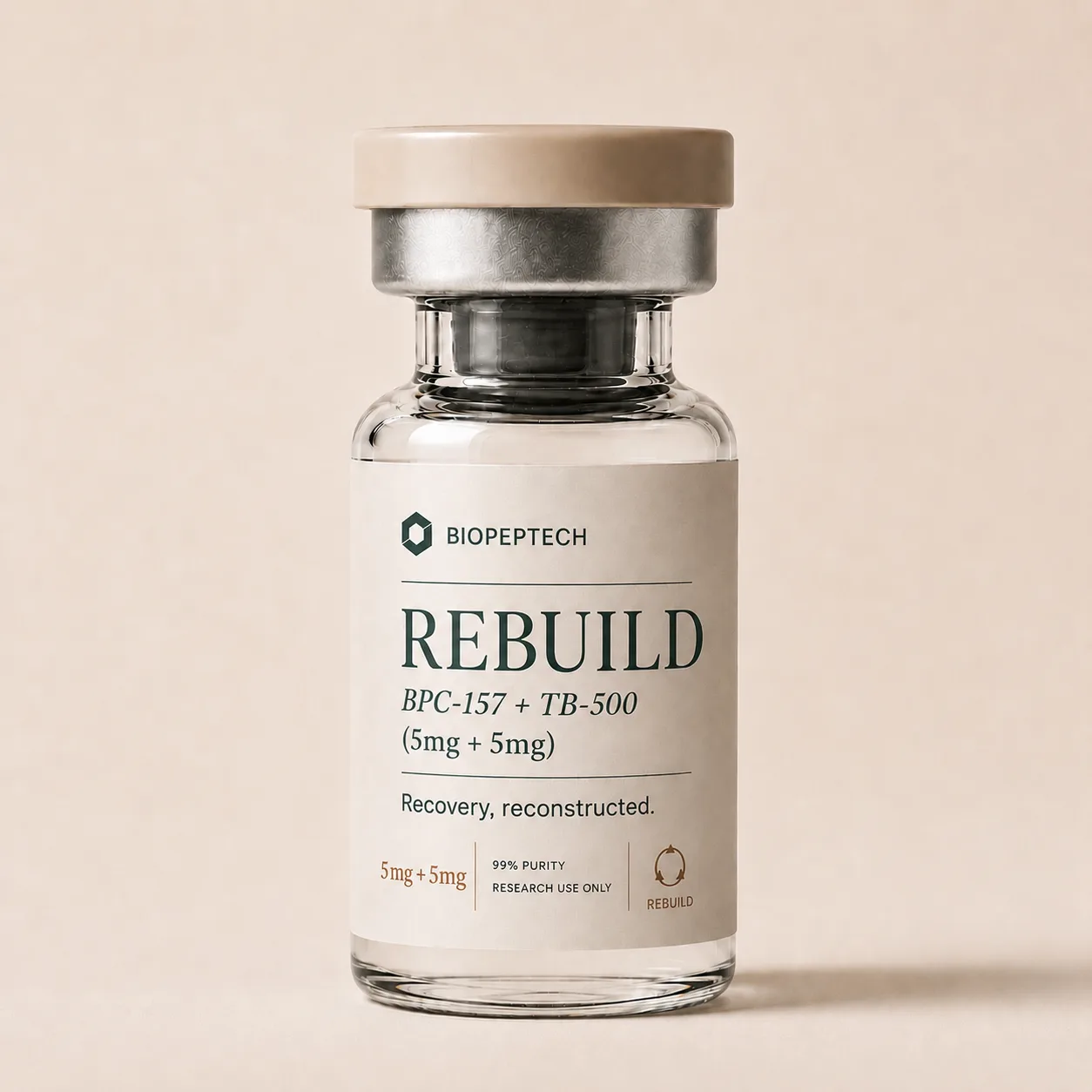
- BPC-157 + TB-500 Pen (REBUILD) — Pre-blended 5 mg + 5 mg stack for comprehensive tissue research
For researchers working across both gastrointestinal and musculoskeletal models, the REBUILD combination covers the full spectrum of BPC-157's studied mechanisms alongside TB-500's complementary repair pathways. Free expert consultation included →
References
Sikiric P et al. Stable gastric pentadecapeptide BPC 157 in trials for inflammatory bowel disease. Current Pharmaceutical Design. 2011.
Sikiric P et al. Brain-gut axis and pentadecapeptide BPC 157. Current Neuropharmacology. 2016.
Sikiric P et al. Pentadecapeptide BPC 157 and the central nervous system. Progress in Neuro-Psychopharmacology & Biological Psychiatry. 2016.
Petrovic I et al. BPC 157 counteracts QTc prolongation induced by haloperidol, fluphenazine, clozapine, olanzapine, quetiapine, sulpiride, and metoclopramide in rats. Journal of Pharmacological Sciences. 2008.
Sikiric P et al. Cytoprotection and injury of the blood-brain barrier by BPC 157. Current Pharmaceutical Design. 2020.
Research Use Only Disclaimer
BioPepTech products are supplied strictly for research use only. They are not intended for human consumption and are not intended to diagnose, treat, cure, or prevent disease.
References
- 1.Sikiric P, et al. (2018). Stable gastric pentadecapeptide BPC 157 and the central nervous system. Biomedicines, 6(3), 100.
- 2.Sikiric P, et al. (2020). Stable gastric pentadecapeptide BPC 157: Novel therapy of the gut-brain axis. Frontiers in Pharmacology, 11, 544.
- 3.Chang CH, et al. (2011). The promoting effect of pentadecapeptide BPC 157 on tendon healing involves tendon outgrowth, cell survival, and cell migration. Journal of Applied Physiology, 110(3), 774-780.
- 4.Sikiric P, et al. (2016). Brain-gut Axis and Pentadecapeptide BPC 157: Theoretical and Practical Implications. Current Neuropharmacology, 14(8), 857-865.