Summary
A deep dive into the science behind stacking BPC-157 and TB-500. Discover how these two peptides work through complementary pathways to amplify tissue repair, reduce inflammation, and accelerate recovery.
When researchers study peptide combinations for tissue regeneration, two compounds appear together more consistently than almost any other pairing: BPC-157 and TB-500. The reason is not coincidence. These two peptides operate through fundamentally different biological pathways — and those pathways are designed to work together.
This article examines what the published research actually reveals about each compound individually, why their mechanisms are complementary rather than overlapping, and what the combined stack represents as a subject of ongoing scientific investigation.
What Is BPC-157? Understanding the Mechanism
BPC-157 (Body Protection Compound-157) is a synthetic pentadecapeptide — a chain of 15 amino acids — derived from a protein found in human gastric juice. It was first described in the 1990s by Croatian researcher Predrag Sikiric and his team, and it has since accumulated one of the most extensive preclinical research records of any peptide under investigation.
How BPC-157 Works
BPC-157 exerts its effects primarily through angiogenesis — the formation of new blood vessels — and through modulation of growth factor expression, particularly VEGF (vascular endothelial growth factor) and EGF (epidermal growth factor). It has also been shown to upregulate tendon fibroblast activity, which is the cellular mechanism responsible for rebuilding connective tissue.
In multiple preclinical models, BPC-157 has demonstrated the ability to:
- Accelerate tendon-to-bone healing — studies in rat models of Achilles tendon transection showed BPC-157-treated subjects healed significantly faster than controls, with superior tensile strength outcomes
- Repair muscle tissue — quadriceps crush injury models showed preserved cross-sectional area and faster functional recovery
- Protect the gastrointestinal tract — BPC-157 has shown cytoprotective effects on gastric and intestinal mucosa, reducing ulceration and promoting mucosal restitution
- Modulate dopamine and serotonin signalling — animal models suggest neuroprotective and mood-stabilising effects under stress conditions
- Reduce inflammatory markers — through suppression of TNF-α and IL-6 pathways at sites of tissue injury
What makes BPC-157 particularly notable from a research perspective is its systemic activity. Unlike many locally administered compounds, BPC-157 appears to exert effects at sites distant from the injection point — a finding that has drawn significant scientific interest.
What Is TB-500? Understanding the Mechanism
TB-500 is a synthetic analogue of Thymosin Beta-4 (Tβ4), a naturally occurring 43-amino-acid peptide present in virtually every cell of the human body. The "TB-500" designation refers specifically to the active fragment responsible for most of Thymosin Beta-4's regenerative properties: the tetrapeptide sequence AcSDKP.
How TB-500 Works
TB-500's primary mechanism involves the regulation of actin polymerisation. Actin is the structural protein responsible for cell shape, migration, and division. By sequestering G-actin (the monomeric form), Thymosin Beta-4 controls how cells move in response to injury signals.
This seemingly simple mechanism has profound downstream effects:
- Cell migration acceleration — TB-500 dramatically increases the speed at which repair cells (fibroblasts, keratinocytes, endothelial cells) migrate to injury sites
- New blood vessel formation — through upregulation of integrin-linked kinase (ILK) pathways, TB-500 stimulates angiogenesis independently of BPC-157's VEGF pathway
- Anti-inflammatory signalling — Tβ4 downregulates inflammatory cytokines including NF-κB, producing a systemic anti-inflammatory effect
- Cardiac tissue protection — research in animal models of myocardial infarction has shown Thymosin Beta-4 can activate dormant cardiac progenitor cells, a finding with major implications for cardiovascular research
- Hair follicle activation — TB-500 has been studied for its ability to reactivate stem cells in hair follicles, stimulating growth in dormant follicles
TB-500's key advantage over many regenerative compounds is its ability to function systemically at low concentrations. Because actin is found in every cell, TB-500's mechanism is not tissue-specific — it can support repair processes throughout the body simultaneously.
Why Stack BPC-157 and TB-500? The Case for Complementary Mechanisms
The most important principle in evaluating any peptide stack is whether the compounds operate through redundant or complementary pathways. Redundant mechanisms produce diminishing returns — you get the same effect twice but don't amplify the outcome. Complementary mechanisms address different parts of the same biological problem, allowing each compound to do what the other cannot.
BPC-157 and TB-500 are a textbook example of complementary mechanisms:
| Mechanism | BPC-157 | TB-500 |
|---|---|---|
| Angiogenesis pathway | VEGF upregulation | Integrin-linked kinase (ILK) |
| Cell migration | Indirect (via growth factors) | Direct (actin regulation) |
| Tissue repair target | Tendon, ligament, gut mucosa | Muscle, cardiac, skin, hair |
| Anti-inflammatory pathway | TNF-α / IL-6 suppression | NF-κB downregulation |
| Speed of onset | Rapid local effect | Sustained systemic effect |
| Primary research strength | Connective tissue and GI | Muscle and cardiovascular |
The practical implication of this table is significant: where BPC-157 is strongest, TB-500 provides support, and vice versa. The compounds do not simply add their effects — they address the full cascade of tissue repair from multiple angles simultaneously.
The Angiogenesis Amplification Effect
Both peptides independently promote the formation of new blood vessels, but through different receptors. This means their angiogenic effects are additive rather than redundant. New blood vessel networks are critical to tissue repair because they deliver oxygen, nutrients, and immune cells to the repair site — and remove inflammatory waste products. A richer vascular network at the injury site translates directly to faster and more complete repair.
The Anti-Inflammatory Synergy
Chronic inflammation is the primary enemy of effective tissue repair. By suppressing inflammatory cascades through two distinct pathways — BPC-157 targeting TNF-α/IL-6 and TB-500 targeting NF-κB — the stack addresses inflammation more comprehensively than either compound could alone. This dual-pathway suppression may help prevent the transition from acute to chronic inflammation that impairs long-term tissue remodelling.
What the Preclinical Research Shows
It is important to note that most BPC-157 and TB-500 research has been conducted in animal models — primarily rodents. No large-scale human clinical trials for either compound as a performance or recovery tool have been completed to date. All references here are to preclinical findings.
Key BPC-157 Research Findings
A 2010 study published in the Journal of Orthopaedic Research examined BPC-157's effect on Achilles tendon healing in rats. Treated subjects showed significantly faster restoration of tendon continuity and superior mechanical properties compared to controls. The authors attributed this to BPC-157's upregulation of tendon fibroblast growth factor expression.
A 2017 study in Molecular Medicine Reports demonstrated that BPC-157 promoted angiogenesis and accelerated gastric ulcer healing in a dose-dependent manner in rat models, with no observable toxicity at therapeutic doses.
Multiple studies have investigated BPC-157's neuroprotective effects. Research in dopaminergic and serotonergic animal models has shown that BPC-157 can moderate neurotransmitter dysregulation following stress or injury, suggesting potential applications in neurological recovery research.
Key TB-500 / Thymosin Beta-4 Research Findings
Thymosin Beta-4 received significant research attention following a landmark 2004 paper in Nature demonstrating its role in cardiac repair. The study showed that systemic Tβ4 administration activated cardiac progenitor cells in adult mouse hearts following experimental myocardial infarction — a finding that opened an entirely new line of investigation into cardiac regenerative medicine.
A 2010 paper in Annals of the New York Academy of Sciences provided a comprehensive review of Tβ4's mechanisms, confirming its role in actin regulation, cell migration, angiogenesis, and anti-inflammation across multiple tissue types.
Research published in FASEB Journal demonstrated that Tβ4-derived AcSDKP peptides significantly reduced fibrosis in wound healing models, suggesting a role not just in initiating repair but in preventing the pathological scarring that can impair function.
The REBUILD Stack: BioPepTech's Pre-Blended Formulation
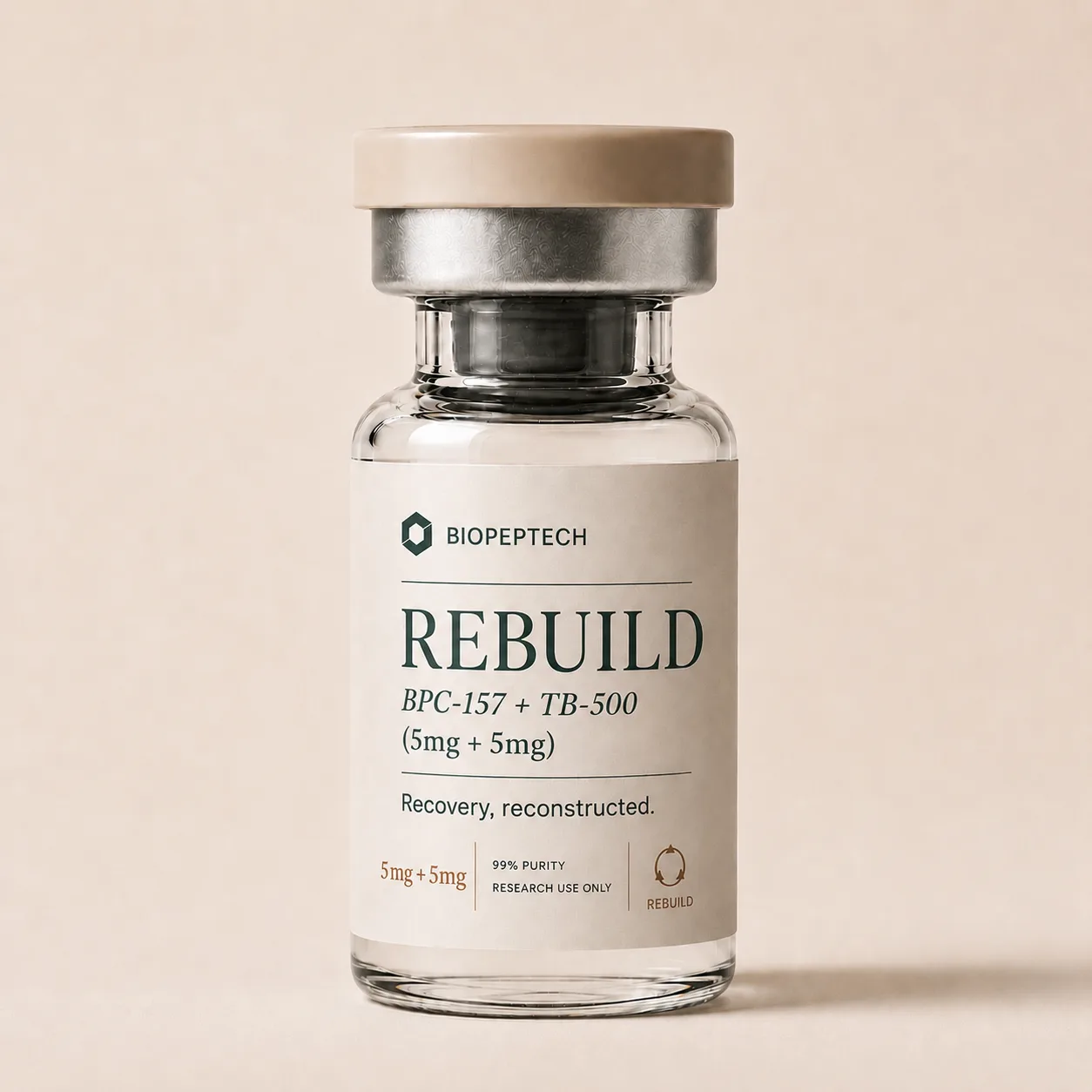
For researchers who want to work with both compounds simultaneously, BioPepTech offers REBUILD — BPC-157 + TB-500 as a pre-blended, lyophilised vial containing 5mg of each peptide per vial. This formulation eliminates the need to source, reconstitute, and combine two separate compounds — each with their own reconstitution ratios — and ensures consistent compound ratios across research protocols.
The REBUILD product page shows lot-specific analytical records when they are available. Confirm that any purity, identity, or endotoxin document matches the current lot before ordering.
For researchers who prefer to work with the individual compounds — to allow for independent dosing adjustments or single-compound investigation — both BPC-157 and TB-500 are also available as standalone 5mg vials.
Reconstitution and Storage Considerations
Both BPC-157 and TB-500 are lyophilised (freeze-dried) peptides that require reconstitution with bacteriostatic water before use. If working with the combined REBUILD vial, the same reconstitution principles apply as for any lyophilised peptide.
Storage:
- Store lyophilised peptide at 2–8°C (refrigerated)
- For long-term storage, keep at −20°C
- After reconstitution, store refrigerated at 2–8°C and use within 14–30 days
- Avoid repeated freeze-thaw cycles
- Protect from heat and direct light
For a complete walkthrough of the reconstitution process, including equipment requirements, bacteriostatic water ratios, and volume calculations, see our guide: How to Reconstitute Peptides: A Beginner's Guide.
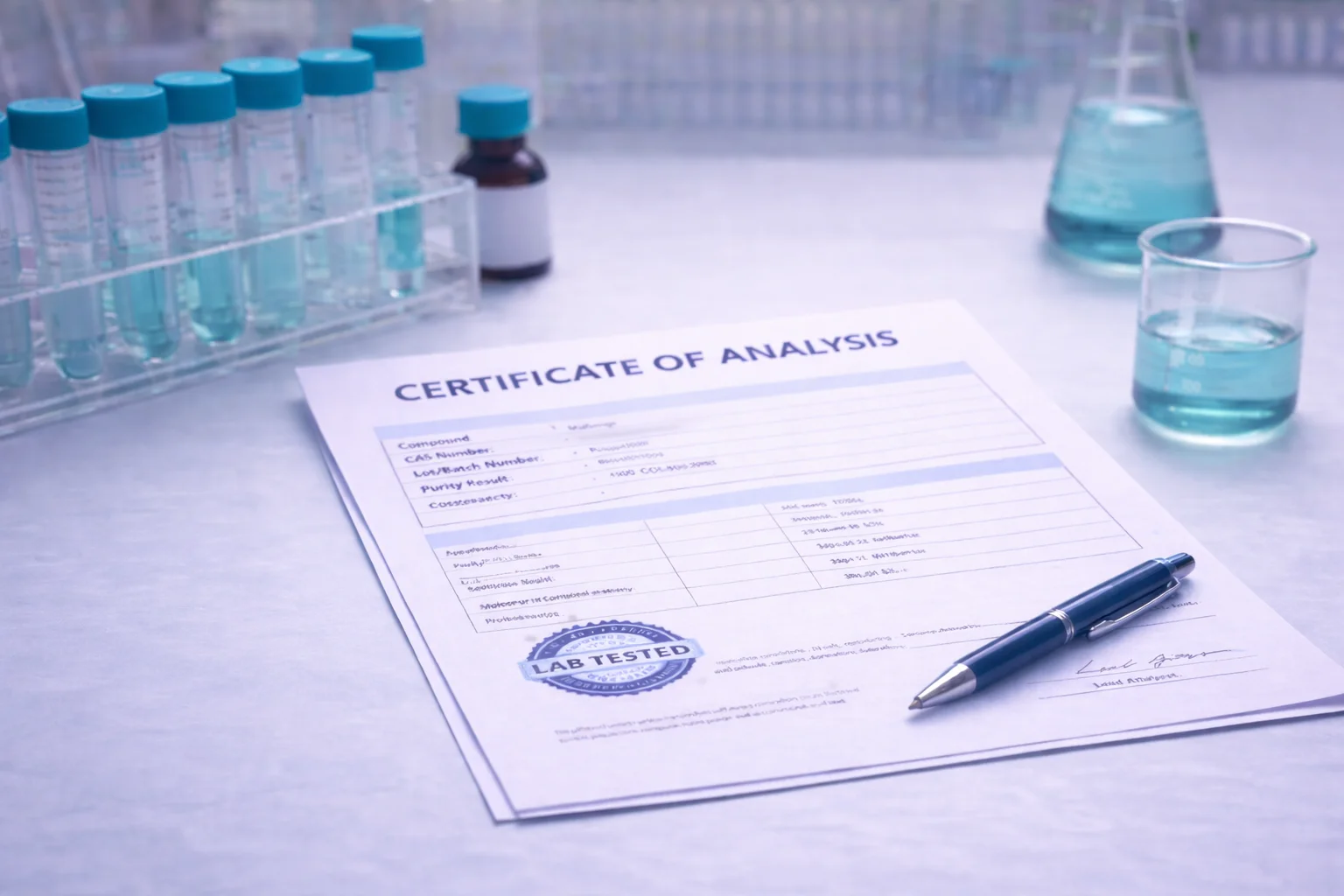
Quality Verification: What to Look for in a CoA
Given the precision required in research applications, quality documentation is not optional — it is foundational. Before working with any BPC-157 or TB-500 formulation, researchers should verify:
- HPLC purity ≥ 98% — confirming the compound is what it claims to be, at the concentration stated
- Mass spectrometry confirmation — verifying the molecular weight matches the compound's known profile
- Endotoxin testing (LAL) — ensuring the preparation is safe for research use, typically ≤ 0.05 EU/mL
- Lot-specific documentation — CoA should reference the specific batch, not a generic product-level document
For a detailed guide on reading and interpreting a Certificate of Analysis, see: How to Read a Certificate of Analysis and Why Purity Percentage Matters.
Frequently Asked Questions
What is the difference between BPC-157 and TB-500? BPC-157 is a 15-amino-acid peptide derived from gastric juice that primarily promotes healing through angiogenesis (VEGF pathway) and connective tissue repair. TB-500 is a fragment of Thymosin Beta-4 that promotes healing through actin regulation, cell migration, and a separate angiogenesis pathway (ILK). They target different biological mechanisms, making them complementary rather than interchangeable.
Why are BPC-157 and TB-500 often stacked together? Because their healing mechanisms are complementary. BPC-157 is strongest on connective tissue and localised repair; TB-500 is strongest on systemic muscle, cardiovascular, and cell-migration-dependent repair. Together they address the full spectrum of tissue recovery more comprehensively than either compound alone.
Is BPC-157 + TB-500 stacking supported by research? Individual preclinical research on each compound is extensive. Direct combination studies in the published literature are limited. However, the complementary mechanisms provide a strong theoretical basis for combination use that has driven significant research interest.
How long does BPC-157 + TB-500 research protocol typically last? Preclinical studies have used varying timeframes. Duration in research contexts depends on the model and endpoint being studied. Researchers should review the primary literature for model-specific protocols.
Where can I source 99% purity BPC-157 + TB-500 for research? BioPepTech's REBUILD formulation is listed as a pre-blended 5mg + 5mg lyophilised vial with a documented 99% purity value. Confirm current availability and any lot-specific analytical records before ordering.
Conclusion
The BPC-157 + TB-500 stack has earned its place as one of the most studied peptide combinations in regenerative research for a clear reason: the two compounds are mechanistically designed to amplify each other. BPC-157 anchors connective tissue repair through VEGF-driven angiogenesis and fibroblast activation. TB-500 extends that repair capability systemically through actin regulation, cell migration, and a parallel angiogenic pathway.
Together, they represent a comprehensive approach to tissue recovery that addresses inflammation, vascularisation, cellular migration, and structural rebuild — the four essential phases of any meaningful repair process.
Researchers can review BioPepTech's REBUILD — BPC-157 + TB-500 listing and any available lot-specific documentation before confirming availability.
All content on this page is intended for informational and research purposes only. BioPepTech peptides are research compounds and are not intended for human consumption, diagnosis, treatment, or prevention of any medical condition.
References
- 1.Sikiric P, et al. (2018). Stable gastric pentadecapeptide BPC 157 and the central nervous system. Biomedicines, 6(3), 100.
- 2.Goldstein AL, et al. (2012). Thymosin beta4: A multi-functional regenerative peptide. Annals of the New York Academy of Sciences, 1269, 56-65.
- 3.Huff T, et al. (2001). beta-Thymosins, small acidic peptides with multiple functions. International Journal of Biochemistry and Cell Biology, 33(3), 205-220.
- 4.Huang MH, et al. (2015). BPC 157 counteracts QTc prolongation induced by haloperidol, fluphenazine, clozapine, olanzapine. European Journal of Pharmacology, 762, 64-71.